The knife is the only item in CS2 that takes on a life of its own on the screen, even before the round begins. Many players choose CS2 knives less for the skin's price and more for how the weapon feels in hand: does it move smoothly, jerk during sudden movement, or draw the eye during the inspection animation?
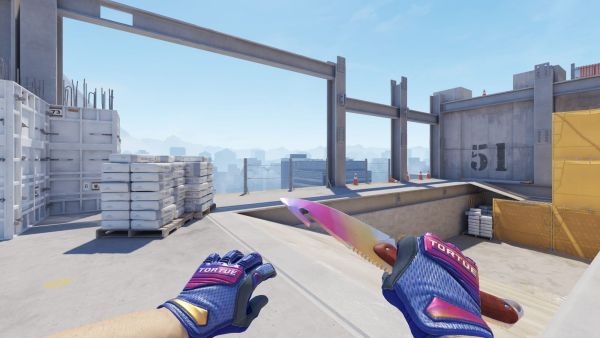
On platforms like Daddyskins, this choice has long since turned into a game in itself. People open cases for the blade's character, not just its pattern. The differences between models go beyond cosmetics; each knife has its own movement mechanics, and the brain interprets that as the weapon's physical weight.
Why Blade Shape and Weight Matter
Every knife has its own choreography. The Butterfly spins almost ceaselessly in hand, the Karambit rotates around the finger like a heavy pendulum, and straight blades like the Bayonet slice the air with short, sharp strokes.
Developers intentionally built varying inertia into the animations so that the models feel distinct, even without changing damage stats. This is noticeable even to beginners. The first thing you notice about a new knife when you try it out isn't the pattern, but the length and smoothness of its "flight" across the screen. Here is what this visual "heaviness" looks like in practice:
-
Karambit spins on the finger;
-
Butterfly’s handles click continuously;
-
Bayonet performs a wide sweep;
-
Navaja snaps open sharply;
-
Kukri chops with a heavy swing;
-
Falchion moves smoothly to the side;
-
Skeleton rotates around its ring.
This difference also hits the wallet. Budget-friendly knives like the Navaja or Survival Knife in basic finishes generally range from $75 to $190, with price variations of 15–40% for the same skin depending on its wear level. Even models with "simple" animations aren't necessarily cheap; the deciding factors are not just the visuals, but the rarity of the drop itself.
What the Numbers Say About Knife Demand
Interest in these details is no coincidence. In 2025, the Counter-Strike cosmetics market was valued at about $5 billion, and a significant share of this popularity is associated with knives featuring distinctive animations. People pay not just for rarity, but for how the item moves on screen every second of a match. Tellingly, even budget models with simple animations maintain steady demand.
How Visual Weight Affects Timing and Aim
A heavy, slow knife animation, whether during inspection or a weapon switch, takes up more frames. In such cases, the brain subconsciously adjusts its rhythm to match the movement.
With a Karambit, players often pause before dashing into the round, whereas with a fast Butterfly knife, they tend to make sharper, more sudden movements. It may seem like a small detail, but over hundreds of hours, it becomes a physical habit that eventually affects both mouse sensitivity and reaction time during initial engagements.
Over time, this even affects sensitivity settings: players accustomed to "heavy" animations often prefer lower sensitivity, while fans of fast blades tend to play with higher settings. That's why Daddyskins focuses on transparent drop odds and fast skin withdrawals. This matters when you are hunting for a specific knife model rather than settling for whatever random knife drops.
The visual knife weight in CS2 is more than just an aesthetic detail for screenshots. It's part of a player's muscle memory; it subtly affects movement timing, the pause before a round starts, and the feel of mouse control.
When you decide between a Butterfly knife, a Karambit, or a normal blade, you are not choosing an appearance. You are choosing a rhythm. It'll dictate your playstyle and define the in-game persona everyone else on the server sees.


