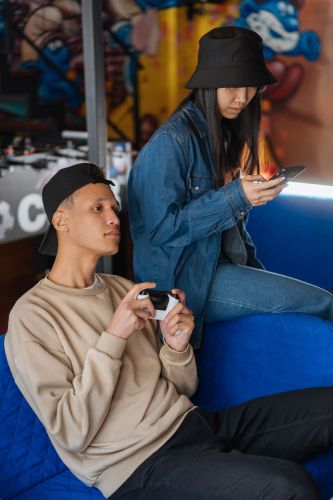
Back in 2018, IGEA and Bond University's Digital Australia 2018 report found that casual gaming in Australia usually came in short bursts of 10 minutes, twice a day. Across every type of play, the daily average came to 89 minutes.
That's an older snapshot of our habits, but the maths still works. Ten minutes plus ten minutes gives you twenty, which is about right for a co-op session with your partner, your housemate or a mate on the couch. Twenty minutes is also a familiar window for adults who enjoy other short-format entertainment; if you're 18+ and like a few quick hands of blackjack, a casiny promo can give that kind of session a little extra.
There are plenty of us to play with, too. The Australia Plays 2025 study found that 82% of Australians now play video games. The series has tracked how we play for 20 years and is now in its 11th edition, so it's one of the most reliable pictures we have of gaming in this country.
Over the next few sections, we'll look at why short sessions are easy to share and who's picking up the second controller these days. Then we'll cover how to match a session to the devices you already own, and what twenty minutes together can add to your week.
The 20-Minute Co-Op Maths Adds Up
Short play has been part of Australian life for a long time. Even before 2018, the Digital Australia 2016 findings described casual play as 10 minutes, three times a day. We've been fitting games into the gaps for years: the train ride, the kettle boiling, the wait before dinner.
Most of us already enjoy company when we play. In 2025, 77% of Australian players said they play socially, according to Australia Plays. Short bursts have tended to stay solo out of habit, and that habit is easy to change.
Think of a twenty-minute co-op session the way you'd think of sharing a cuppa. It takes about as long as the two solo sessions you'd probably have had anyway. You come away with a chat, a few laughs and maybe a shared win.
The short format asks very little of you. There's no evening to clear and nothing to plan around. You finish a level or a round, you both put the controllers down, and the rest of your night goes on as usual.
Plenty of Aussie adults already like entertainment that works this way. Casiny Casino, for example, offers slots, table games and live casino titles from providers including NetEnt and Evolution Gaming. Its site is set up for mobile browsers as well as desktop. Quick, self-contained sessions are a format most of us know well.
Player Two Has Entered the Lounge Room
So who's joining you for those twenty minutes? Who you play with makes a big difference to how much fun the session can be, and the mix of players in Australia looks different from how it did a few years ago.
IGEA's Australia Plays 2025 release reported that women now make up 51% of Australian players, while men make up 48%. That's the first time female players have been the majority in the series. In 2018, women made up 46% of players. So your partner, sister or housemate is more likely than ever to say yes when you hold out the second controller.
Technology is making that invitation easier too. With Nintendo Switch 2's GameShare, one console that owns a supported game can share it with other Switch 2 or Switch consoles, and the people joining don't need their own copy. Original Switch consoles join over local wireless, which works fine when you're in the same lounge room.
One idea worth trying is to let the less experienced player choose the game. The person who plays more then takes the supporting role, handling the tricky jumps and cheering the other player on. It keeps things even, and you both get something out of the session.
A few simple habits help keep it relaxed:
- Agree on a finish time before you start.
- Pick a game with short levels or rounds.
- Take turns deciding what you play.
- Keep snacks within reach.
- Stop while you're both still having fun.
Housemates often enjoy shared live entertainment too. Casiny Casino's live casino includes game shows such as Dream Catcher and Monopoly Live, with live dealers and players from around the world joining in real time. Like a good co-op round, they're easy to enjoy side by side.
Honestly, the best co-op partner is usually the one who laughs when you both fall off the same ledge.
Pick Your Co-Op Game by the Clock
Once you've found your Player Two, it's time to choose what to play. The good news is that most Aussie homes are already set up for it. According to Australia Plays 2025, 74% of households own two or more game devices.
Each device suits a slightly different kind of short session:
| Device |
Share of Australian players |
What makes it suit a 20-minute co-op session |
| Console |
87% |
Couch play or GameShare, plus games built around short chapters |
| Smartphone |
71% |
Quick matches you can join from almost anywhere |
| PC |
58% |
Online co-op with friends who live across town or interstate |
Whichever device you use, look for games built around short chapters, levels or rounds with a clear finish. A natural stopping point is what makes twenty minutes feel complete instead of cut short.
Sharing a game has become easier as well. Hazelight's co-op adventure Split Fiction has sold 7 million copies. Its Friend's Pass lets someone who owns the game play online with a friend who doesn't. It's a longer game, better suited to big weekend sessions, but it shows how easily a second player can join in now.
Clear finish lines show up in other kinds of entertainment too. Casiny Casino's table games, including Classic Blackjack and European Roulette, are played in short, separate rounds. The site also offers session time limits among its responsible gaming tools. Setting your finish time before you start is a good habit whatever you're playing.
Which device in your house gets used the least? Could it be Player Two's controller tonight?
Small Sessions With Big Catch-Ups
Once you've picked your game and your partner, sharing those twenty minutes does more than add a second name to the scoreboard. In Australia Plays 2025, 94% of 18 to 34-year-olds who play to support their mental health said they do it to de-stress, and 32% of that age group said they play to stay connected with family and friends. Parents are part of this too. Of parents who play with their children, 54% say they do it as a fun way to connect.
It also helps to remember who's playing. The average Australian player is about 35 and has been gaming for 14 years. That's someone with work, family and a full calendar. They know what they enjoy and have less time for it.
IGEA CEO Ron Curry described this generation of players well:
"We've seen a generation grow up with video games, and those gamers are now playing with their children. They are still enjoying playing games and they know how to use them to create joy and connection within their families."
That's where a twenty-minute session fits in. It's long enough to share a win and a laugh, and short enough to happen on a Tuesday night when everyone's tired. Over a few weeks, those little check-ins add up to a lot of time spent together.
Your Next Twenty Minutes Belong to Two
We started with two ten-minute bursts. Add more women picking up a controller, homes full of devices and plenty of reasons to connect, and you end up with a simple routine. A twenty-minute co-op session can work like a regular walk with a friend: easy to keep up, and easy to look forward to.
Many of us are also choosing our screen time more carefully. Deloitte's 2025 Media & Entertainment Consumer Insights found that weekly media time fell 3.4% to 42 hours and 45 minutes, while average monthly spending on digital entertainment rose 24% to $78 over the same period. Deloitte's Peter Corbett called it 'conscious consumption'. Short, shared sessions fit that pattern.
There's plenty of choice for those deliberate windows. For many of us, Casiny Casino is one good option, with fast withdrawals and games from top-tier software providers.
So set a finish time tonight, pick a game with a clear ending and hand over the second controller. Who's the first person you'd ask to be your Player Two?
Advisory Notice: Gambling should be treated as a form of entertainment, not a source of income. Set a budget you can afford to lose before you start playing, know your limits in advance, and walk away if you find yourself chasing losses or feeling pushed to keep going. If the enjoyment fades and worry sets in, step away and seek professional support. 18+ only.


