With a lengthy transition to the screens of our mobile devices, casino games have undergone massive changes in the past few decades, homogenising technology and entertainment.
This winding road takes us from traditional brick-and-mortar casinos to the virtual world of video games, finally landing in the palm of our hands, so let’s dig deeper into it!
The Early Days of Casino Games in Video Games
This transition from traditional casino games began in the 1970s. One of the first significant innovations was the introduction of video slot machines.
In 1976, Fortune Coin Co. developed the first video slot machine, replacing traditional physical reels with virtual ones displayed on a screen. This was a turning point in gaming history because it finally allowed designers to create more exciting graphics and animations, not to mention interesting bonus features that couldn't be imagined with mechanical machines.
Early home gaming consoles also started to adopt casino games around this time. Released in 1977, the Atari 2600 came with early titles like Blackjack that allowed users to play simple card games from their living rooms.

Screenshot Source: https://www.youtube.com/watch?v=kY2VnlWrsOQ
As the technology evolved, so did the offerings; by 1993, Nintendo's Vegas Stakes hit the Super NES, inviting gamers to try other casino games such as poker and roulette, all the while following a storyline designed to turn $1,000 into $10 million.
These early adaptations began the groundwork for future developments in casino gaming and proved there was a market for these experiences at home without stepping foot into a casino. Since then, casino bonuses, including welcome offers and loyalty rewards, have become key incentives for attracting and retaining online players.
This legacy is still felt today through promotions such as the Borgata Borgata casino bonus code, which enables those people who prefer staying at home over visiting a physical casino to enjoy the same thrill.
The Rise of Online Casinos
The real game-changer came in the late 1990s when the internet, as we know it, was born.
The first online casinos emerged around 1997, enabling players to compete against one another.
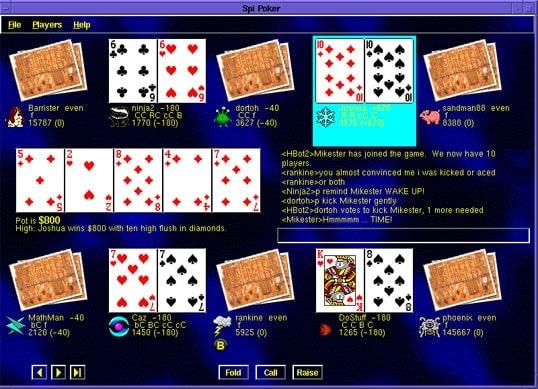
Image Source: https://www.beatthefish.com/online-poker-history/
Those early sites were rudimentary, with simple table games and maybe a handful of slots, but they laid the groundwork for what would become a vast industry.
As internet technology improved, online casinos became more refined. By the early 2000s, faster internet speeds allowed for enhanced graphics and more interactive experiences. Now, players can enjoy live dealer games, which bring the action of a real casino right to them.
At this time, online poker really started to take off, especially as such television events as the World Series of Poker gained global audiences and enticed many new players to try online gambling.
The Transition to Mobile
The arrival of smartphones in the early 2010s led to another organic movement within the online casino market, again regarding accessibility.
With mobile devices, playing on the go became possible, significantly increasing the number of potential players. Developers quickly responded by creating portable, scaled-down versions of their most popular casino titles. Thanks to this sudden rise in creation, users could now spin slots or play poker on their phones or tablets.
This mobile revolution also brought a rise in social casino games—free-to-play titles that mimic traditional gambling but with no real money changing hands, a.k.a, social casinos. These games became extremely popular across social media networks, gathering millions of users and bridging the gap between casual gaming and real-money gambling.
In seeking more stimulating experiences, many players would find themselves moving from social casino games to actual online gambling.
The Current Landscape
Today, these casino games are available on almost all platforms, from PCs to mobile devices, but they still dominate the market.
Now, advanced technologies, including virtual and augmented reality, are being integrated into these games, changing how they are played. VR casinos provide an immersive environment for players to interact with each other and their surroundings.
Augmented reality is particularly exciting as it enhances user engagement by overlaying digital elements onto the real world, something technology like Apple Vision Pro has massively popularised.
With AR technology, players can experience virtual slot machines or card tables wherever they are by creating an interactive gaming environment. Alternatively, casinos could use it as a heads-up display for their clients. This innovation not only allows for real-time interactions with virtual dealers and fellow players but also provides valuable data about game statistics directly within the player's physical space.
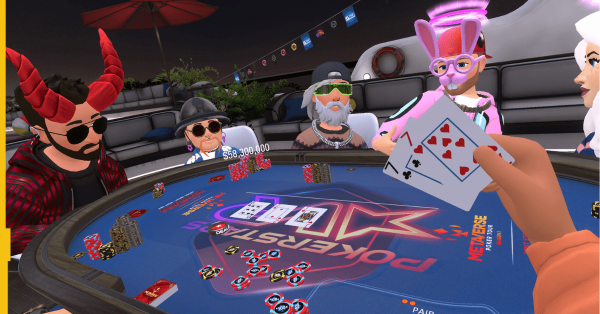
Image Source: https://next.io/news/casino/pokerstars-vr-rebrands-to-vegas-infinite/
The Future and Potential Challenges
The ties between gaming and gambling keep getting stronger with each year.
During those past years, it's evident that the evolution of casino games reflects more significant changes in entertainment consumption as the games adapt to consumers' habits.
Even features like loot boxes in video games now echo traditional gambling mechanics, leading to discussions about regulation and responsible gaming practices among developers and policymakers alike.
Regulatory changes also have a hand in the way digital gambling works. As governments worldwide move with these changes, they try to instate responsible gaming measures while still allowing the industry to innovate.


