 You know the feeling in a good co-op game. That moment your buddy pulls off a perfect revive just as a monster is about to finish you off. It’s built on a foundation of trust: the unspoken agreement that you’re in this together. But what if that foundation had a crack running right through it? What if your most valuable teammate was also your biggest threat? Welcome to the heart-pounding, nerve-shredding world of the PvPvE hybrid, a genre that’s taken modern gaming by storm by making trust both your greatest weapon and your most glaring weakness.
We’re talking about games like Hunt: Showdown, the infamous Dark Zone in The Division and the brutal Escape from Tarkov. These aren’t your grandparents’ co-op games. They take the classic idea of teamwork and inject it with a heavy dose of pure, unfiltered paranoia. The enemy isn't just the computer. It’s a triple-layered nightmare: the brutal, unforgiving game world itself (the PvE), the other human players lurking in the shadows (the PvP) and the terrifying, unspoken question of whether the person you’re talking to on voice chat is about to sell you out for a shiny new gun. This genre is the ultimate stress test for friendship, creating stories you’ll be telling for years, usually that start with, "You won’t believe what happened…"
Forced into an Alliance: The Glue of a Common Enemy
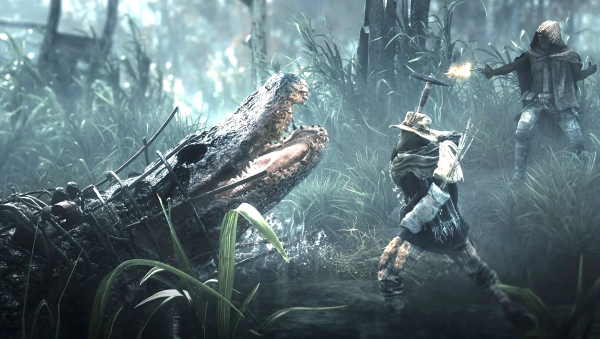
The "Environment" part of PvPvE isn’t just background noise. It’s the entire reason you need to cooperate in the first place. The AI enemies are often so overwhelming that going solo is a death wish. In Hunt: Showdown, you and your partner aren’t just casually exploring a swamp. You’re fighting through hordes of zombies, avoiding sound traps and trying to take down a monstrous boss... all just to earn a bounty. If one of you goes down, the other has to make a split-second decision: risk it all for a heroic revive, or cut your losses and run.
This shared struggle for survival creates a powerful, if temporary, bond. You learn to communicate in hushed tones, covering each other’s blind spots and sharing ammo. You develop a kind of unspoken language (a pointed look, a specific movement). It’s co-op at its most raw and visceral. The high you get from pulling it off is incredible. But that shared triumph has a dark side. Every gunshot that saves you from a zombie also acts as a dinner bell for every other player on the map. Your success makes you a target.
The Mind Games: Playing the Paranoia Economy
This is where the genre truly separates itself. The "Player vs. Player" element transforms a tough mission into a psychological thriller. Think of the Dark Zone’s extraction points. You’ve fought through hell to get some epic loot, and now you have to stand in one spot for a full minute, completely vulnerable, waiting for a helicopter. Your teammate is supposed to be guarding you. But are they? Are they eyeing your new gear? Are the other players who just helped you clear a path now deciding your loot looks better in their inventory?
This creates what players call a "paranoia economy." Trust isn’t a given; it’s a currency you have to spend wisely. Do you help that lone player being chased by monsters, knowing he might just turn around and shoot you? Do you stick with the random teammate you just met, or do you make a break for it on your own with the loot? The rules aren’t written in a tutorial; they’re rewritten every second by human greed, fear and opportunity. Misplaced trust doesn’t just mean you lose a match; it often means you lose hours of progress. It’s a brutal lesson that blurs the line between the game’s fiction and our very real emotions.
This intense, unpredictable nature is exactly why clear communication about what players are getting into is so crucial. While the games themselves thrive on chaos and moral gray areas, the industry that creates them operates within very clear, real-world rules. For players and parents in Europe, understanding a game's content isn't a guessing game. There are robust, legally defined frameworks for age ratings and content descriptions. If you ever need a definitive, official source to check a game's suitability (to see exactly why it got a certain age rating or what specific content triggered it) all that crucial consumer information is centralized and available for everyone at pegionline.eu. This system provides a vital safety net, a layer of absolute clarity outside the game's designed ambiguity.
Why We Keep Coming Back for More Punishment
So why do we put ourselves through this emotional wringer? Because the greatest moments in these games aren’t scripted by the developers. They’re written by us. The most legendary stories aren’t about completing a quest; they’re about that time you and a stranger made a silent pact to survive, or the gut-wrenching betrayal when a "friend" decided your legendary sniper rifle was worth more than your digital life.
By forcing us to work together in a world where turning on each other is always an option, PvPvE games tap into something deep and fundamentally human. They’re part game, part social experiment. For anyone tired of predictable gameplay and hungry for stories that feel genuinely their own, this genre is the pinnacle. It serves up victories that taste sweeter than any other and defeats that sting long after you’ve turned off the console. It’s cooperative gaming, remixed for the age of anxiety.


