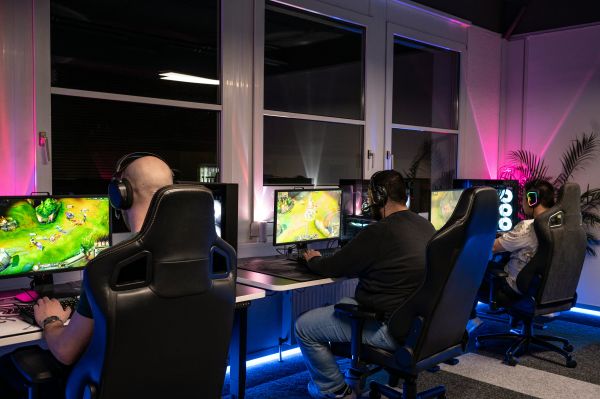
A group of people playing a video game photo – Free Computer Image on Unsplash
You can tell when a squad just works. No shouting. No chaos. Just movement that feels like instinct. Someone’s already watching your flank, someone else has dropped a shield, and you’re lining up the finisher before anyone has to say a word. It’s not luck or magic. It’s hours of practice turned into instinct, trust built one clutch play at a time.
When everything clicks, the game almost disappears. The screen fades, the noise drops, and all that’s left is rhythm. Great co-op play isn’t about sharp aim or lightning reflexes. It’s awareness, timing, and the stillness in the middle of chaos that holds a team together. You can train those things anywhere if you know where to look, and once you do, you’ll start to feel that same invisible rhythm in every match you play.
Before you jump into matchmaking, warm up the instincts that carry into team play. These early drills build muscle memory and spatial awareness, the foundation for reactions that feel automatic and communication that feels effortless. Precision-based titles like Beat Saber or the training modes in Apex Legends are perfect for this. They sharpen rhythm and control until your body reacts before your brain finishes the thought. Every flick, every dodge, every beat teaches you to predict what happens next. That kind of training makes coordination smoother once you’re with a squad.
Some of the best options for building focus and composure come from places you might not expect, such as certain online casino platforms. They train mental composure and fast decision-making, two abilities that often matter more than pure reflex. Reports on these games highlight how they depend on real-time choices, pattern recognition, and emotional control. Players who can stay calm under pressure and think clearly when the stakes rise are more likely to get some gains; although nothing is guaranteed, so such games should be played just for fun.
The same lessons show up in puzzle games and management sims like Factorio or Overcooked! They’re masterclasses in resource management, planning, and adaptive problem-solving, exactly what good squads rely on when chaos hits. These games might look hectic, but they’re really about timing and coordination. You learn to manage priorities, adjust on the fly, and anticipate what your teammates will do next. Even when playing solo, you’re building habits that make teamwork faster and cleaner.
When communication feels natural, everything else speeds up. Communication discipline and clear roles keep everyone on rhythm. Research from Old Dominion University found that players who define roles develop tighter coordination and make fewer mistakes. Squads that play together regularly perform better and stay calmer than random groups. If everyone knows who calls rotations, who flexes for support, and who manages cooldowns, the team wastes less time and reacts faster when things go wrong.
Staying adaptable is another quiet skill that separates steady teams from frustrated ones. Anyone who’s survived a major patch knows how quickly the rules can change. The University of Hawai?i studied competitive updates and found that frequent patch cycles reshape how players perform. Great co-op squads treat every update like a new playbook. They read the notes, test the changes, and figure out what actually works. Staying curious keeps a group agile, no matter what the developers throw at them.
Technical awareness is its own kind of teamwork. No matter how well a team communicates, lag can break the rhythm. Latency, not speed, determines whether actions feel responsive, and technical studies keep proving it. The fix is simple. Use a wired connection when possible, close background streams, and give your gaming device priority on the router. When the network behaves, so do we. Smooth callouts, fast reactions, no frustration.
Good communication isn’t just technical; it’s emotional. Emotional control and prosocial habits keep a squad together longer than any strategy guide. Toxicity destroys trust faster than a failed mission. The University at Buffalo found that even advanced moderation tools miss tone and context in voice chat. The solution is culture, not automation.
The University of Southern California’s researchers noticed something simple but powerful when studying disruptive behaviour in video game culture: squads made up of friends fight cleaner, stay calmer, and help each other more. Set simple rules. Use push-to-talk. Cool down after a loss. Give feedback without heat. Muting isn’t rude; it’s respect. We all play better when the air stays clear.
Endurance might be the most underrated co-op skill of all. The Journal of Intercollegiate Sport reports that structured breaks, posture checks, and short resets keep players alert and consistent. You can’t win long matches if your focus fades halfway through. Treat co-op like training. Play for fifty minutes, then pause. Stretch, stay hydrated, look away from the screen. Small habits like these keep your reflexes sharp and your concentration strong.
The teams that look effortless are the ones who practice the invisible stuff. They build timing in rhythm games, composure in strategy titles, and coordination through steady habits. They don’t rush or panic. They move together, following a rhythm they built long before the match began. That’s what real co-op skill looks like: quiet confidence that turns teamwork into something unforgettable.


