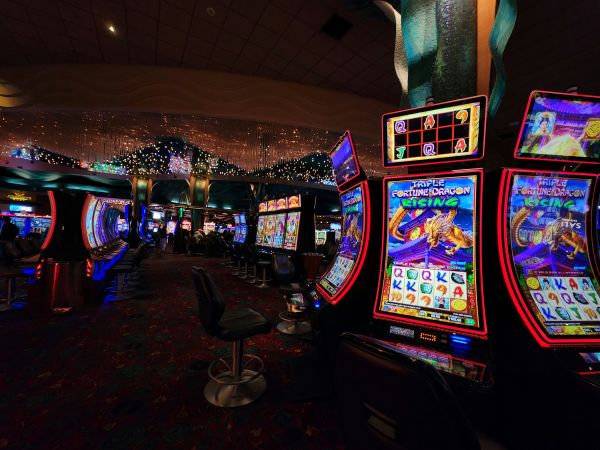
Walk into a casino in the 1990s and the first thing you heard was the noise. Rows of cabinets. Flashing lights. Coins dropping. Slots were physical machines you stood in front of, fed with cash, and hoped for the best.
Fast forward to now and you can spin a reel while sitting on your couch. That did not happen by happenstance. Land-based machines went digital. Then they went online. Now they live inside apps. States like New Jersey and Michigan have reported consistent year-on-year iGaming growth since regulation began, with online casino revenue forming a large part of total gaming income. The device changed, but the basic appeal stayed the same. You press a button, and the reels spin while you wait for the result.
From Mechanical Reels to Digital Cabinets
The original Liberty Bell machine appeared in the late 1800s. Three reels with five symbols and a mechanical payout. And… that was it.
By the 1970s, video slots started replacing purely mechanical systems. Instead of physical reels, screens handled the graphics. By the 1990s, casinos were running cabinets powered by internal software rather than springs and gears. The game still felt simple, but the tech underneath was very different.
That foundation made online slots possible. Once games became software-driven, moving them to the internet was logical. Major operators now treat digital as a serious revenue stream. MGM Resorts reported growth supported by strength in its betting and interactive divisions, showing how traditional casino groups are investing heavily in online operations.
You can see the pattern. What started as hardware became software. Once it became software, it could live anywhere.
The Smartphone Era Changes Player Habits
Desktop gambling had its moment. Then smartphones took over.
The global mobile gambling market was valued at $82.4 billion in 2024 and is projected to reach $218.3 billion by 2032. That is not vague growth. That is a near tripling in less than a decade.
More than half of all online gambling activity now happens on mobile devices. In the United States, around 75 percent of online gamblers say they prefer placing bets on a smartphone rather than a desktop. You do not need a gaming PC. You need a decent phone and a stable connection.
That convenience changes behaviour. You are no longer planning a session, but dipping in during a commute, on the sofa or between matches. The machine is no longer fixed to a casino floor. It travels with you.
Interactive Play and the Broader Gaming Ecosystem
Slots did not evolve in isolation. The wider gaming world moved online as well.
Cooperative games, online multiplayer titles, and cross-platform play are now standard. If you browse a games database you can filter titles by system, online support or local split-screen. That kind of access was impossible twenty years ago.
The same logic applies to slots. Players expect choice. They expect instant access. They expect to move between devices without losing progress. Digital gaming trained you to expect flexibility, and online slots followed that model.
What Modern Slot Platforms Actually Offer
So what does a modern slot platform look like in 2026?
First, volume. Leading platforms host hundreds, sometimes thousands, of slot titles built by established software studios. Second, transparency. Return-to-player percentages are published clearly, and volatility levels are often explained in plain language. Third, mobile optimisation. Games load inside apps or browser-based platforms without clunky downloads.
If you are trying to compare options, curated rankings like Casino.org's recommended slot sites organise platforms based on slot libraries, mobile performance and user experience. The focus is not just on flashy graphics. It is on how the games run, how fast they load, and how clearly information is presented.
That is a long way from a single mechanical machine bolted to the floor. Now you are comparing interfaces, software providers and payment speeds from your phone.
Digital Entertainment Is Platform First
The bigger story is not just about slots. It is about where entertainment lives now.
Gaming, streaming, and interactive content all sit on digital platforms. Community-focused and cooperative gameplay show how players gather online rather than in one physical room.
Slots sit inside that same environment. You are not walking through a casino to find a machine. You are opening an app. The cabinet disappeared. The reels stayed. The screen got smaller. The access got easier. And for a lot of players, that is exactly the point.
The Machine Changed but the Core Stayed the Same
Strip away the screens and the apps and you are still looking at the same basic idea that powered the Liberty Bell in the 1800s. What changed is the setting. The casino floor became a website. The website became a mobile app.
For you, that means access without travel, choice without waiting for a machine to free up, and information presented clearly before you play. The hardware faded into the background. The experience stayed simple. That is why slots made the jump so smoothly from cabinets to pockets.


