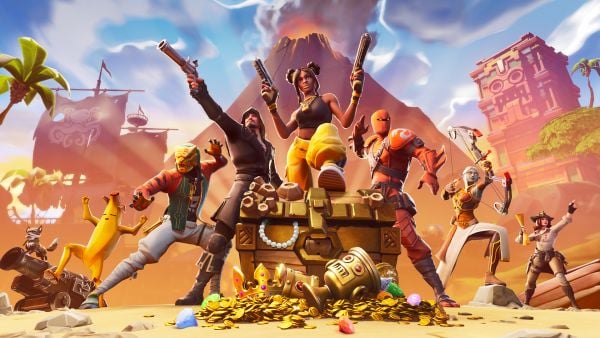
Today’s biggest multiplayer titles are designed around shared ecosystems instead of isolated hardware communities. Games like Fortnite, Minecraft, and Call of Duty: Warzone have pushed the industry toward unified party systems that connect console, PC, cloud, and mobile players simultaneously.
The impact has been massive. According to recent cross-platform gaming research, about 72% of gamers now play on two or more devices. The same report found that cross-platform titles generate 45% higher player retention during the first month compared to platform-exclusive games.
This trend is accelerating in May 2026 as publishers focus heavily on frictionless social gaming. Here's exploring the rise of cross-platform party systems in revolutionizing multiplayer gaming in 2026.
The End of Platform Walls
For decades, multiplayer gaming was divided by hardware. Xbox users played with Xbox users. PlayStation users stayed inside Sony’s ecosystem. PC players occupied their own competitive space. But that model is rapidly disappearing.
Modern party systems now allow players to create persistent social groups that move between devices without losing progress, friends lists, voice settings, or cosmetic inventories. A player might begin a session on a console, continue on mobile gaming sites with top reviewers like https://spinprofy.com/, and later join friends through cloud streaming on a laptop.
This flexibility has changed player expectations. Cross-play is no longer treated as a bonus feature. It is becoming a standard requirement for multiplayer success. Recent market analysis shows that 95% of major studios with more than 50 employees now prioritize cross-platform support in their development roadmaps. This statistic highlights how deeply social connectivity now influences modern game design.
Sophistication, Socialization, and Scale
Cross-platform gaming itself is not new. What evolved is the sophistication of party systems.
Earlier cross-play models often felt complicated as players struggled with account linking, incompatible voice chat systems, or broken matchmaking. Today, those barriers are disappearing thanks to unified identity management and AI-assisted matchmaking systems.
Even more, publishers now understand that social retention drives revenue as players can easily join friends across devices and remain active for longer. That increases battle pass purchases, cosmetic sales, and long-term engagement. It's why industry analysts increasingly describe multiplayer ecosystems as “social entertainment hubs” rather than standalone games.
Epic Games has become a major example of this strategy. Similarly, Fortnite alone now supports battle royale, racing, creator experiences, LEGO collaborations, and live events within one connected platform.
The scale is enormous. Current estimates place Fortnite’s monthly active player count between 110 million and 120 million users in 2026. The game has surpassed 650 million registered accounts globally. Without advanced cross-platform party systems, managing communities of that size would be nearly impossible.
Cross-Platform Gaming Is Expanding the Audience
One major reason publishers embrace cross-platform systems is audience expansion. Games now launch simultaneously across console, PC, mobile, and cloud streaming services. This creates larger matchmaking pools and shorter queue times.
Moreover, the model helps smaller multiplayer games survive. Previously, niche games often died quickly because player populations became fragmented between platforms. Today, unified party systems keep communities active longer by merging users into one ecosystem.
Recent conversations on Reddit gaming platforms show how important larger player pools have become. Many gamers acknowledge that faster matchmaking and the ability to play with friends outweigh platform-based frustrations.
This behavioral leaning has significantly impacted the broader market. Gaming market forecasts estimate the broader video game industry could reach $352 billion by 2030, with cross-platform accessibility playing a major role in user acquisition strategies.
Voice Chat and Shared Social Spaces Redefine Success Metrics
Voice communication has become central to modern party systems. In older multiplayer environments, console and PC voice systems often operated separately. Players depended on third-party apps to communicate effectively.
That fragmentation frustrated users. Today’s leading games integrate native voice systems that work across all supported devices. Some publishers are also implementing AI moderation tools that reduce harassment and toxic behavior in real time.
These improvements are making multiplayer environments more accessible to younger and casual players.
Cross-platform party systems now resemble social media ecosystems as much as gaming lobbies. Players share clips, create persistent communities, attend virtual concerts, and participate in live events together in a way that redefines the success of multiplayer games.
Cloud Gaming Is Accelerating the Shift
Cloud gaming is also helping cross-platform party systems grow faster. As streaming technology improves, players no longer need expensive hardware to join multiplayer sessions.
Players now participate in games traditionally associated with consoles or gaming PCs via their smartphones. This dramatically lowers the entry barrier.
On the publishers' part, every additional device expands the ecosystem. More users mean larger communities, which translates to stronger monetization opportunities.
Developers are now placing a strong emphasis on accessibility and handheld gaming experiences that function across hardware categories. This shift results in a multiplayer environment that feels increasingly device-agnostic, suiting virtually everyone.
“Ecosystem-Thinking” Taking Over Gaming Sectors
Gaming companies no longer compete solely through hardware power. They are competing through ecosystems.
Microsoft keeps pushing toward a device-flexible Xbox future that blends console, PC, and cloud experiences together. Elsewhere, Sony is also adjusting its approach while PlayStation increasingly launches multiplayer titles across platforms to maximize engagement and revenue potential.
Even family-oriented gaming products are embracing ecosystem thinking. The kid-focused Nex Playground platform recently emphasized safe connected gaming and social accessibility as major selling points. This suggests cross-platform connectivity is influencing every segment of the industry.
Final Thoughts
Cross-platform party systems will likely become even more sophisticated over the next few years. AI-powered matchmaking, real-time language translation, cloud-native social hubs, and universal gaming identities are already under development. These features can increasingly help multiplayer experiences to feel seamless regardless of location or hardware.
Ultimately, multiplayer gaming is evolving into a continuous social platform rather than a series of disconnected sessions. Gone are the days when even cross-platform party systems are no longer experimental features. They are becoming the foundation of modern multiplayer gaming. As player expectations keep rising, the companies that build the smoothest and most inclusive ecosystems may dominate the next era of interactive entertainment.


