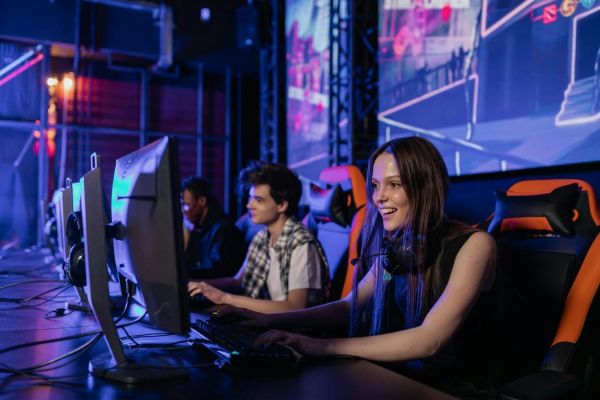
The gaming landscape has changed significantly, with cooperative experiences becoming increasingly popular. Games like Deep Rock Galactic, Valheim, and Enshrouded have built large audiences by prioritizing teamwork over competition, reflecting a broader shift in how players connect and play together.
The same principles that make cooperative gaming work translate surprisingly well to casino gaming and other online entertainment sectors. Players who enjoy working together toward shared goals often seek similar collaborative experiences elsewhere, whether that's puzzle-solving adventures or even strategic gameplay found at best online real money casinos where team-based tournaments and shared jackpot pools create parallel community dynamics. The appeal of collective achievement crosses genre boundaries more than most developers initially expected.
Shared Goals Create Lasting Bonds
Cooperative games force players to communicate, strategize, and adapt together. That's not marketing speak. Anyone who's survived a horde night in 7 Days to Die or coordinated a heist in Payday knows the difference between playing alongside strangers and actually working with them. The latter requires voice chat, planning, and a willingness to cover someone else's mistakes.
These interactions build trust. When a teammate revives you under fire or shares their last healing item, it creates reciprocity. Players remember those moments. They add each other as friends, join Discord servers, and suddenly a random matchmaking session becomes a regular Tuesday night gaming group.
Accessibility Matters More Than Difficulty
One common misconception is that cooperative games need to be easy to build communities. That's backwards. Games like Monster Hunter or Elden Ring's co-op mode are notoriously challenging, yet they've cultivated dedicated player bases precisely because overcoming difficulty together feels meaningful. Research has shown that cooperative and multiplayer video games help players foster meaningful social connections and build supportive communities, particularly among younger demographics who use gaming as their primary social outlet.
What matters is that failure doesn't feel punishing. Games that let players learn together, experiment with different strategies, and laugh off wipes create psychological safety. Nobody wants to be the weak link, but in well-designed co-op experiences, everyone struggles at some point. That shared vulnerability is what transforms random players into communities.
Player-Generated Content Extends Longevity
The strongest cooperative communities don't just play games. They expand them. Modding scenes for titles like Terraria and Minecraft have added years of content that developers never imagined. Custom maps, new game modes, and quality-of-life improvements all come from players who care enough to contribute.
This creates a feedback loop. Better community tools lead to more engaged players, which attracts new people, which generates more content. Games like Left 4 Dead 2 are still active more than a decade after release specifically because the community kept them alive through custom campaigns and mutations.
Cross-Platform Play Breaks Down Barriers
Console tribalism used to fragment gaming communities into isolated ecosystems. Cross-play changed that equation. When Xbox, PlayStation, and PC players can team up in the same lobby, community sizes explode. More players means faster matchmaking, which reduces frustration and keeps people engaged.
Developers initially resisted this, citing technical challenges and platform politics. But games that embraced cross-play early, like Rocket League and Fortnite, demonstrated the competitive advantage. Co-op games benefit even more because they're not zero-sum. Adding more potential teammates only improves the experience.
The Future Looks Cooperative
Upcoming titles like Ratatan and Warhammer 40,000: Dawn of War IV are doubling down on cooperative mechanics. That's not coincidental. Publishers have noticed that games with strong co-op elements have better retention rates and more positive community sentiment. Players stick around longer when they've made friends, and they're more likely to buy expansions or cosmetics to support games their social circles inhabit.
The shift toward cooperation over competition isn't universal, and it doesn't need to be. But for community building, few mechanics are more effective than giving players a reason to work together toward something bigger than individual achievement.


