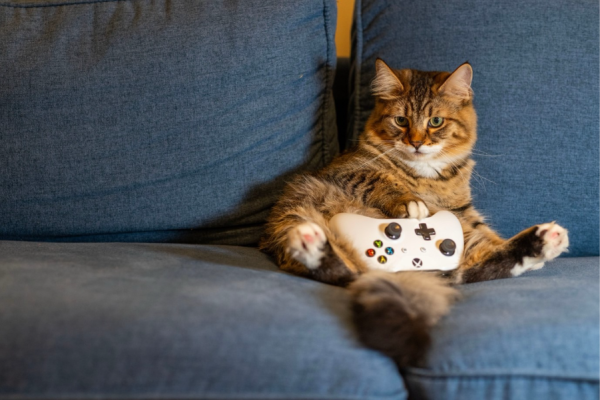
 Image by Nathan Osman from Pixabay
A personal reflection
When my now thirty-something sons were boys and teenagers, like most of their peers, they were big into video gaming. At the time, their favorites included Mario Kart, Guitar Hero, Band Hero, and any of the FIFA games. Being siblings, they were inclined to fight in real life and when playing co-op games – particularly when it came to who got the guitar and who had to play the drums. Therefore, the addition of friends to the playing environment could be a huge relief for the weary parent. However, back then, getting new people involved in the game was not simply a matter of issuing an online invitation or connecting with your friends through the online play options.
All co-op gaming was the couch version, and friends had to be invited over, remember to bring (or even own) a compatible controller, and be gotten home safely. It involved meticulous planning. Now grown up, they all still enjoy playing video games, but being able to do so with their friends is now a considerably easier affair. They can now invite their friends to play no matter where in the world they are and play against people they have not met before. While as parents we once worried that video gaming might be isolating, the truth is that it has been a fantastic way to nurture friendships and create new ones. Recent studies have even concluded that online gaming spaces can be socially accommodating environments that can help people connect.
Comparing all the options
These days, everyone has a choice as to whether they want to play virtually or in real life. They are different experiences but equally valid. Co-Optimus's game database is the perfect place to find which games to play based on the number of people playing and the type of games they want to play. For couch gamers, you can look up your console model, number of players, and any special features to see what is on offer. You can also find when the latest version of the game is coming out. The same applies for those who want their co-op play to be online.
Record-breaking gaming
However, it no longer needs to be either, or there are also combo games like Final Days and Doom + Doom II, where you can have 4 or 8 people "on the same couch" and 16 people in the ether. Bigger co-op games like Factorio can have up to 500 people co-operatively playing, and that is too many for any couch. That feat was achieved by NSG College League (Japan), in Niigata, Japan, on 13 October 2017. However, they were not playing video games.
The largest multiplayer game on a single screen consisted of 113 simultaneous players on the game Splat! (2013) in New York, and that record still stands. However, that pales into insignificance when you think of the over 25.8 million concurrent players that have been recorded on Roblox's Steal a Brainrot. Concurrent and co-operative play have transformed gaming's social possibilities, thanks to near-ubiquitous smartphone ownership, cloud gaming, and lightning-fast connections from 5G and fiber-optic internet.
Social gaming beyond traditional multiplayer
Gaming is most certainly no longer child's play either, with many other forms of online entertainment incorporating social features, including casino and card games. While online gambling for real money in the US is restricted to a very small number of states, the social gambling scene is countrywide. Many people who enjoy casino games are delighted to be able to access all their favorite titles and play alongside friends and acquaintances for leaderboard positions, points, and bragging rights. There are also sweepstakes online casinos which offer a gambling-adjacent experience of playing with virtual cash that, when played through the system, can result in real-world prizes. Players are also increasingly finding fun by playing in free tournaments.
If you are wondering where you can get all the information about what is available to play in social, sweepstakes, and real-money casinos, independent review site Casino.org gives you a great chance to line up the options and compare before playing. The comparison site's homepage illustrates the variety of online gaming formats now available in the US. The US online casino market can seem baffling, so a bit of insider, expert information is always welcome.
The latest craze
Card rip sites are also great fun and very 'on trend'. While physical card collecting has had a massive resurgence, this is the virtual version. These sites let you rip open trading card packs online, and the reveal happens instantly or on a live stream. These sites are a perfect blend of the virtual and real world. Platforms like MyPrize Packs and Underdogs Rips sell you Pokémon and sports card packs, and whatever you pull is yours to sell back for credit, ship, or vault. These are a pretty new kind of site, and rules vary by state.
Building bonds
Given how much my now-grown-up sons loved collector cards when they were younger, and how they've rekindled their interest as young men, I probably shouldn't tell them about these! It is also worth remembering that a pull can be worth less than the price you paid for the pack (but that is the case in real life too). Card trading obviously still happens in purely real-life situations too and is another way to build social bonds or just nurture the collector gene some people seem to possess.


