Research has shown that the brain of a child can develop faster when they are allowed to manipulate and play with things around them. One way to do this is by allowing them (children) to engage in puzzles.
There are many types of puzzles, both traditional and digital, and they all play a vital role in the development of a child. They are important when trying to keep children away from tablets, TVs, and computers and engaging them in different forms of entertainment.
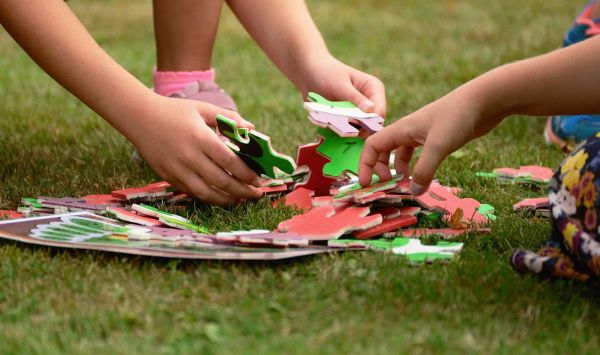
Image source: https://www.verywellfamily.com/what-are-fine-motor-skills-2162037
In addition, puzzles help children relax while at the same time challenging their minds to grow and engage in constructive activities. One advantage of getting puzzles for your children is the cost. Most of them are cheap, readily available, and can be used for a long period of time until your children outgrow them.
So, why should you get puzzles for your children? There are several reasons why every parent should make sure that their children are engaged in puzzles. They include;
Development of Cognitive Skills
Parents can get puzzles on different topics and themes including vegetables, pets, numbers, alphabets, colors, transport, and shapes. This helps in developing a good understanding of the topics and themes as well as increasing their visual awareness. It is important to understand that children learn differently, and getting puzzles for them could be the only way to unlock their potential.
Memory Development
Puzzles come in many forms and versions, some traditional while others are digital. No matter the version, puzzles such as those on Logic Lovely allow children to use reasoning, deduction, and adaptive thinking when putting the puzzle together. This is because they have to remember patterns and shapes, which helps in developing the retention of their memories.
Problem Solving Skills
When working on a puzzle, children are supposed to achieve a certain goal, which is basically solving the puzzle. To achieve this goal, they are forced to come up with strategies and think about what to do to get there. While doing this, children are involved in reasoning, solving problems, and coming up with solutions. This helps them develop their problem-solving skills, something that can play an important role in their adult life.
Development of Fine Motor
Fine motor describes the skills in children that allow them to use their hands and fingers when manipulating objects. One way of developing these skills is through the use of puzzles. Children pinch, pick and grasp pieces of different sizes and shapes when engaging in puzzles. They also manipulate them, move them around, fit them, and sort them when trying to solve the puzzle. This plays an important role in their fine motor development.
Improving Patience and Concentration
Children are supposed to focus and remain patient for a considerable amount of time when solving puzzles. They are forced to take time and analyze ways through which different pieces should fit into each other. This helps in improving their patience and concentration skills, something that will help them in their adult lives.
Parents need to help their kids especially when it’s their first time to engage in puzzles or even PC games and help them keep working since it is not easy to solve puzzles or play on their own the first time. For example, Xbox One comes with a Co-Pilot feature that allows parents to use two controllers (one for the parent and the other one for the child), with the console recognizing them as one.
Finding Out A Child’s Interests
Puzzles come in many forms. They can be in the form of maps, letters, numbers, shapes, pets, and colors among others. Sometimes, you might realize that a child is interested in a certain form of a puzzle more than any other. For instance, if your child is interested in arts puzzles, then it could mean that the child is developing an interest in arts. This can help parents in guiding their children through what they love, even when they are old enough to start schooling.
Conclusion
Child development is very vital for every parent. They (parents) all want the best for their children, and they try to help the children in many ways. One of the ways that have been proven to help in child development is the use of puzzles. Engaging your children in puzzles will play a vital role in developing different skills that will help them later in their lives.

