As games become more advanced, so do their storage requirements. More and more games are demanding at least 100GBs of storage space, and gamers are forced to look into external drives just to store them. At first glance, it’s tempting to say that games are getting bigger because graphics are getting better and the games themselves are more complex. Although games are much more detailed when compared to the ones from 20 years ago, you have to remember that we are playing them at much higher resolutions as well. For this reason, character models, environments and even visual effects are bigger, which is having a major impact on the amount of storage a game needs.

Source: Pexels
Cloud Gaming Aims to Reduce Game Storage Requirements
Ongoing research aims to reduce the overall size of games, but there is a limit as to how much can be done here. The complexity that gamers expect when purchasing a big-budget game means that big storage requirements come with the territory. One way to mitigate this is to opt for cloud storage. Games can be stored within a cloud and then streamed to a PC in real time. Casino games in particular have taken advantage of online gaming for quite some time. You can play hundreds of slot games without having to download a thing. Even promotions linked to certain slot games can be found online, including deposit bonuses and free spins for Wildz.
By moving full games, and their features online, companies can free up storage space for players while providing the same experience. This also paves the way for gaming across multiple devices, whether it is mobile, tablet or PC.
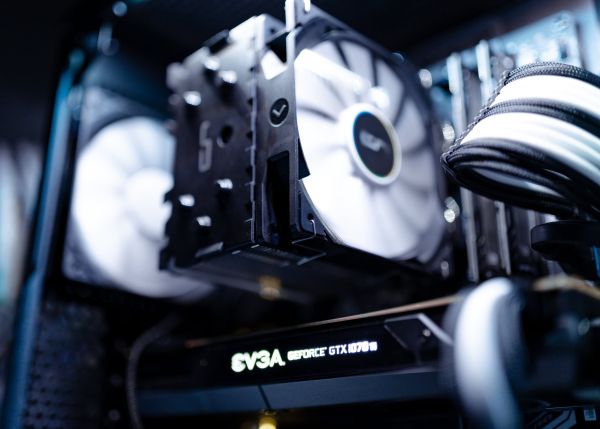
Source: Pexels
Will Games Ever Become Smaller?
As technology advances, graphic files may eventually be compressed further, meaning that users can get the same gaming experience without having to download 100GB+ of data. It’s not all about the graphics, though. Audio files also consume a lot of storage space, especially if they are not compressed before being stored. It’s common to see 35GB+ of a game’s total storage needs, allocated to audio files alone. In-game cinematics are also another huge factor. Sequences such as this, which often contain HD audio and video, are notorious for taking up a lot of space. Finally, texture. Textures are digital images that tend to be used in 3D graphics, and this can have a substantial impact on the size of a game. One 4K texture can easily be 64MB, which can add up if you have a game with complex graphics.
Interestingly, generational and even locational factors play a role here too. Developers with large hard drives may not be familiar with limiting assets. Wheras those who work in tech hubs may not understand the importance of limiting game size due to the widespread availability of fiber-optic internet. However, in more rural areas, fiber-optic is yet to be rolled out, meaning that those who do not have access to top-end tech or streaming speeds will be the ones to suffer as the result of the 100GB movement.


