Cooperative gaming relies on the concept of a balanced team where participants work together. They raid digital dungeons or defend control points against enemies. This feeling of connection is what's been missing in casino gaming. It alienated people who sit at a single screen or machine.
Nevertheless, the industry is changing with software engineers introducing multiplayer architectures to these platforms. Developers are creating advanced multiplayer lobbies that mimic the social hubs found in massive role-playing games. They're transforming the isolation of traditional slots into a community experience.
The Evolution of the User Interface and Virtual Lobbies
Freepik
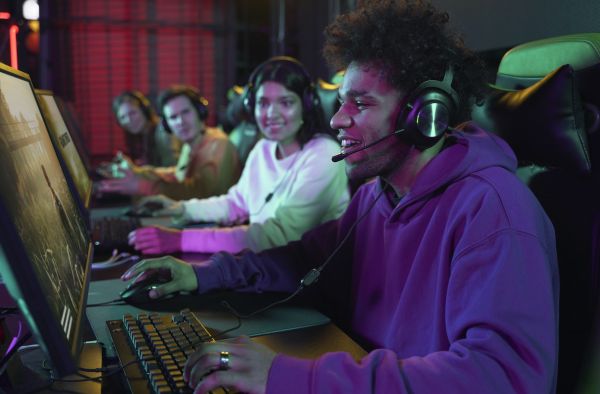
Graphic design has evolved beyond 2D grids to become a medium of immersive experiences. It features virtual lounges simulating a real-life floor's hustle. Choosing to play real money slots online puts players in a lobby filled with action. They'll see avatars jumping around machines or rejoicing in their wins.
This shift transforms the user experience of personal interaction into a collective digital ecosystem. It's a space where visibility and presence are as significant as gameplay. This interface isn't about reels and buttons, but offers a spatial component for sitting by friends and high-rollers. It's just like a LAN party or an arcade experience.
Understanding the Core Mechanics and Game Metrics
Behind these social features stands the fundamental mechanics that establish the rewarding of participation and balance within the software. Software providers place high emphasis on games with an RTP of around 96%. They're ensuring that sessions last at least an hour to allow for the formation of social bonds. This allows for the formation without any excessive depletion of the balance.
Moreover, current networked jackpots enable players to make direct donations to a central prize fund. Thus, spinning a mobile phone benefits everyone in the entire virtual room. Such connectivity ensures the excitement of a high-volatility game can be communicated to other devices regardless of the individual's location. The equipment used doesn't matter, whether it's a smartphone or a desktop computer.
Community Slots Act as the Raid Boss of Gambling
Freepik
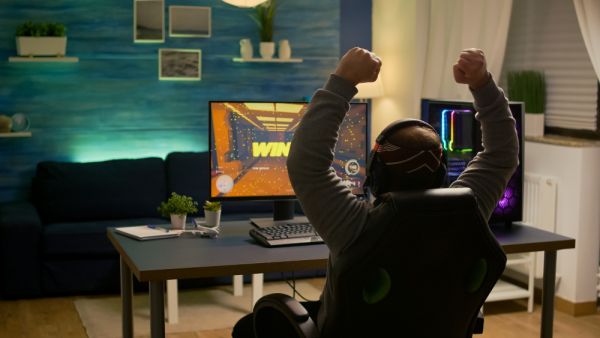
The sector’s key innovation is community slots, functioning as boss fights in role-playing games. Although players roll their own reels, certain events trigger lobby-wide activity, such as the appearance of a scatter symbol. When achieved, the game stops individual play, and the entire group enters a team bonus round.
In this activity, players work together to defeat an online monster or unlock a shared safe room for the loot. It's distributed among the members based on their contributions or the amount they staked. This fixer successfully connects the line between personal fortune and distributed labor.
Communication Channels Reinforce Social Bonds
Communication is undoubtedly the pillar of any collaborative setting, acting as the proper foundation for success. In modern casino lobbies, advanced chat features have been incorporated. Much like the chat feeds found on popular streaming sites, these built-in systems enable gamers to engage in live, real-time chat functionality. They're able to talk with each other to console over a defeat or celebrate a jackpot.
They've introduced specific features, such as gifting, where a player can give small in-game gifts, like helpful boosters or rare luck charms, to someone else. This act serves to significantly strengthen the bond of cooperation between them. Custom emojis and avatars help people form online gamer identities, replacing anonymous user IDs with recognizable ones.
Spectator Modes Create a Passive Entertainment Layer
All participants may not even have to be active spenders to enjoy the atmosphere of these new multiplayer lobbies. The emergence of spectator mode enables users to enter a room and observe what's happening. They don't place their own relevant bets, similar to those who demonstrate professional streams.
It creates an effect of hype and community, making the slot machine a spectator sport. It's where the audience can cheer and respond to results. This creates a sense of a roller coaster where a player on a high roll can garner a crowd. It can enhance the adrenaline rush and reputation with victory.
Shared Goals and Competitive Leaderboards
Freepik
To cultivate more group dynamics, developers often apply shared goals, which force the team to act as a unified unit. Typically, rivalry between two lobbies arises, and this concept has fostered a guild-like mentality in which Team A competes with Team B. They're doing this just to increase the amount of prize money available to them.
Some of the daily missions in the room must be completed. They can involve spinning the room a specific number of times or hitting symbols. Hitting a particular number will activate a global buff. These mechanics provide an experience where no individual player loses, serving a greater cause. So, they're beneficial to the group.
The Party Never Ends in the Era of Shared Jackpots
The gaming industry is taking a decisive step past the lone gamer figure. It's seeking an active and social gaming community. For those who enjoy cooperative games, this development presents an intriguing alternative. It's a method for enjoying the mechanism of probability-based simulation without any isolation involved. It changes a turn's solitude into the true collective exhilaration of victory.
The distinction between a video game party and a casino lobby is becoming increasingly indistinct. That's happening as these developers continue to perfect these virtual lounges. This new age makes the excitement of the jackpot no longer a solitary personal affair. It's a group event that a group of people can thoroughly enjoy.


