
The Gaming Setup Mistakes You Only Notice After Long Sessions
Photo by Glenn Carstens-Peters on Unsplash
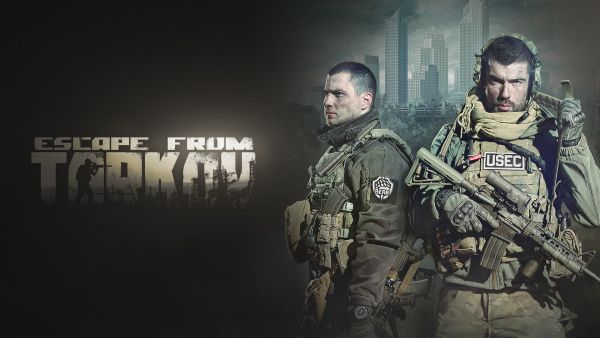
Your backpack is full. Two GPUs, a keycard you have been hunting for three wipes, and enough ammo to fund your next five raids. The extraction point is 400 meters away, you can hear a firefight somewhere to the east, and every step you take is a small negotiation with yourself: push for the safe in the next building, or take what you have and run? Anyone who has played Escape from Tarkov knows this exact moment, and knows that the decision usually matters more than aim ever does.
That moment has a name in game design circles: the bank-it-or-lose-it decision. You hold unrealized gains, the gains grow the longer you stay exposed, and one bad beat wipes everything back to zero. It is one of the oldest tension engines in gaming, and over the past few years it has quietly become the connective tissue between genres that otherwise share nothing, from hardcore military sims to cartoon roguelikes to real-money games played in browser tabs.
Strip away the guns, the loot tables, and the lore, and you arrive at the rawest version of the idea: crash gambling, a real-money format where a multiplier starts climbing from 1x and every player in the round decides, second by second, when to cash out before the curve breaks. Stay in too long and the round crashes, taking your stake with it. A recent guide to the format notes that most rounds resolve in under a minute, with provably fair algorithms letting players verify each crash point after the fact, which explains why the format has spread so quickly across crypto-friendly platforms.
What makes crash interesting from a design standpoint is that it removes every other variable. There is no aim skill, no build optimization, no map knowledge. The entire game is the cash-out decision, isolated and repeated, with the added twist that everyone in the lobby watches the same curve and sees exactly who bailed early and who got greedy. It is the extraction moment from Tarkov compressed into twenty seconds and run on a loop.
That purity is precisely why it is worth examining alongside the games co-op players actually spend their evenings in. The same psychological machinery is doing the work in all of them.
The extraction genre is the most obvious heir to this design. Escape from Tarkov built its entire identity on it, and its 1.0 release in late 2025 only sharpened the stakes. Every item you carry into a raid is collateral, every item you find is an unrealized gain, and extraction is the only way to convert paper profit into something permanent.
Hunt: Showdown 1896 refined the formula by making the prize itself a beacon. Banish a boss and every other team on the map knows roughly where you are, which means the value of your bounty rises in direct proportion to the danger of holding it. Arc Raiders then proved the loop works even when you sand off the hardcore edges. PC Gamer's recent look at how Marathon handles the genre argues that extraction games are still figuring out their own rules a decade in, splitting between Tarkov's punishing realism and more social, exploratory takes on the same core loop. The variation is wide, but the spine never changes: the longer you stay, the more you stand to win, and the more you stand to lose.
Anyone who has played these games with a regular squad knows the social layer this adds. The decision is no longer just yours. One teammate wants to hit the boss lair before leaving, another is whispering "we have enough, we have enough" into the mic. Half the stories you tell afterward are about the time you stayed thirty seconds too long.
Roguelikes run the same engine at a different clock speed. In Hades II, which finally arrived on Xbox, Game Pass, and PlayStation 5 this spring, every chamber is a small wager. Take the door with the better boon behind it, knowing the encounter will be harder? Spend health as a resource at Charon's shop, betting you can finish the region without it? The genre's defining tension is that a run is worth nothing until it is finished, and the strongest builds are usually the ones assembled by players willing to risk a promising run on a greedy pick.
Slay the Spire II, currently tearing through Early Access, makes the wager even more explicit. Elite fights are voluntary. Each one is a side bet: relic and gold if you win, the entire run if you misjudge your deck. Co-op spins on the formula, like SWORN and TMNT: Splintered Fate, layer the extraction-shooter social dynamic back in, because now your greedy pick can sink three other people's run too.
The roguelike version of cashing out is subtler than hitting an extract, but it is there every time you choose the safe path on the map or bank resources instead of gambling them on an event room. The genre trains the same muscle: recognizing the difference between a calculated risk and a tilted one.
The reason this loop shows up everywhere is that it exploits a well-documented quirk of human judgment. People feel losses roughly twice as strongly as equivalent gains, which is why dropping a full kit in Tarkov stings far more than the satisfaction of a successful extract, even when the math is identical. Game designers do not need players to be rational. They need players to feel the weight of the decision, and loss aversion guarantees they will.
There is also the matter of agency. Random loot drops happen to you. A cash-out decision is something you do, which means every outcome, good or bad, feels earned. When the curve crashes one tick after you bailed, or your squad extracts with seconds left on the timer, the game has manufactured a story you will retell for weeks. No scripted set piece can compete with tension you built yourself.
That is the real lesson running from Tarkov to Hades to a twenty-second crash round: the most compelling moments in games are rarely about execution. They are about the half-second before you commit, when you weigh what you have against what you might still get, and find out exactly how much nerve you brought with you.
Photo by Glenn Carstens-Peters on Unsplash

Lost Millions and Management Priorities
When top clubs put together their operating budgets, partnership payouts from tournament organizers are factored in as a guaranteed foundation for paying high salaries and covering logistics. For any modern esports organization, voluntarily declining guaranteed spots at major tournaments is a direct

The sad reality is that there aren’t many horse racing games on the market. Even though it is very satisfying to ride a horse, horse racing games never became mainstream, which means that developing companies are not risking investments in developing new games.