
Which Online Casino Games Offer the Best Odds?
Online casino games come with a range of varied odds. Finding which titles provide the best chances is not as easy as you may think.
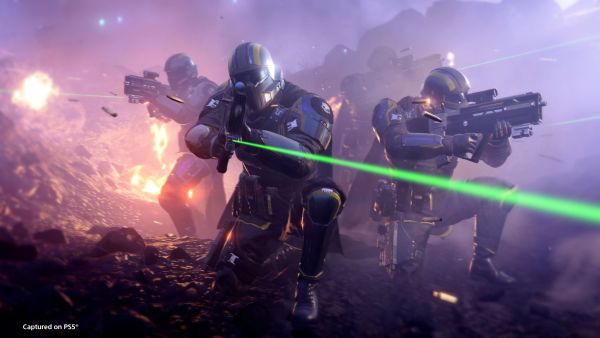
Cross-platform co-op has made real progress over the past two years. More titles ship with cross-play enabled from day one, more publishers treat it as a baseline feature rather than a stretch goal, and the platform holders have made the backend plumbing easier to work with. The ecosystem is better than it was in 2024.
It is still not fully there. A short list of recurring friction points still breaks the experience across major titles, and some of those friction points have been stubborn for years. This piece looks at where cross-platform co-op is working well in 2026, where it is still breaking, and why some of the harder problems have not been solved yet.
Session invites across platforms have become much more reliable. The days of friends on PlayStation and Xbox giving up on invite systems and resorting to third-party voice chat to coordinate are mostly behind us. Baldur's Gate 3, Helldivers 2, It Takes Two, and Palworld all handle cross-platform invites cleanly in their current builds.
Account linking is also more streamlined. Most major titles now have an in-game flow for connecting console accounts to publisher accounts, which is the pattern that enables cross-progression on top of basic cross-play. Fortnite made this a mainstream expectation years ago, and other publishers have mostly caught up.
Platform-neutral party systems have also improved. the earlier cross-platform party systems coverage tracked how in-game parties replaced platform-locked party chat for many co-op sessions. The practical result is that mixed-platform groups now coordinate inside the game rather than fighting with separate party systems that do not talk to each other.
Voice chat remains the most persistent cross-platform pain point. Native console party chat still does not reach PC players in most titles, which pushes mixed groups onto Discord or in-game voice systems with inconsistent quality. The problem has been visible for years and the solutions remain patchy.
Cross-progression gaps also persist. Some titles support progression carryover across all platforms, others support it between PC and one console but not another, and a surprising number still gate it behind region or publisher account issues. Players coming into a title mid-stream often cannot predict which case they will land in without reading forum threads.
Input parity remains a design challenge rather than a solved problem. Shooters have mostly settled into separate PC and console matchmaking pools or heavy aim-assist calibration to balance mouse-and-keyboard against controller. Co-op PvE titles sidestep the input question but inherit UI quirks when a controller player and a keyboard player share a game that was designed for one or the other.
The backend infrastructure for cross-platform play has quietly become much more capable. Microsoft's cross-platform play documentation lays out the matchmaking, networking, and account-linking primitives that publishers can now plug into without rebuilding their own stack. Similar frameworks exist from Epic (through Epic Online Services) and from PlayStation and Nintendo on their respective networks.
The result is that cross-platform play is no longer an infrastructure problem for most publishers. The remaining friction is almost always on the design and policy side, where decisions about voice chat routing, cross-progression scope, and input balancing produce the actual player-facing issues. The pipes are there, but what is still inconsistent is how publishers decide to use them.
Titles that launch with cross-play as a day-one feature tend to handle it better than titles that bolt it on later. Helldivers 2 and Palworld both treated cross-platform as a core design assumption from the start. Older titles retrofitting cross-play often ship it in staged rollouts, with certain features missing in early versions.
Cross-platform patterns appear in some unexpected places outside the co-op gaming space. The mobile casino sector has quietly solved a narrow version of the cross-device problem that co-op gaming is still working through. Mobile casino platforms routinely let players start a session on desktop, continue on mobile, and keep their wallet balance, bonus state, and game progress intact across the handoff.
The approach is different from co-op cross-play but shares the same underlying infrastructure problem. Fruity King and other UK mobile casino operators handle this by anchoring everything to a single account identity on the server side, with the client platform treated as interchangeable rendering surfaces. The player can swap devices mid-session with no data loss.
The reason this works for mobile casino is that the gameplay itself runs on the server through a Remote Game Server architecture, with the client acting as the display layer. Co-op games cannot adopt the same model wholesale because they rely on client-side simulation for input responsiveness. Some of the account-identity and session-state patterns that mobile casino uses are still transferable to how co-op cross-progression could be structured.
The short list of outstanding cross-platform co-op issues has not changed much over the past year. Voice chat routing, consistent cross-progression, and input parity still top the list of things players complain about. The infrastructure to fix all three exists, with the gap being in publisher implementation choices.
The best-case scenario for the next two years is that voice chat routing becomes a solved problem through either native console openness or standardized third-party integration. Cross-progression becomes a default rather than an opt-in. Input parity continues to be handled through matchmaking separation or careful calibration rather than being pretended away.
Cross-platform co-op in 2026 is in a much better place than it was in 2024. The remaining issues are solvable, and the industry has mostly agreed that cross-play is a baseline expectation rather than a differentiator. The next two years should be about closing the gaps rather than building new infrastructure.
Online casino games come with a range of varied odds. Finding which titles provide the best chances is not as easy as you may think.

The group has spent half an hour organising an evening that has not begun.

Video games have a place in almost every Kiwi home. According to NZ Plays 2025, 91% of New Zealand households include someone who plays.